How To Know If You're Buying Imported Meat
posted on
September 15, 2026
All meat is NOT created equal. For example, beef from a pasture-raised setting is going to be a very different product than beef from a feedlot or CAFO (confined animal feeding operation) setting.
Then there's domestically-raised beef versus imported beef. And who knows, the imported beef could be better quality than some domestic beef. There's no way to know unless you personally could trace the animal back through all its life stages (which is different than a government mandating RFID so THEY can trace and track animals).
There’s currently no Country of Origin Label (COOL) requirement enforced in the U.S. And I’ve read that even when it was required, there were loopholes which allowed meat animals grown in other countries to be labeled as product of U.S.A.
The honest truth is that unless you have a relationship with your farmer, your confidence in knowing where that ground beef came from is only as good as a potentially dubious label.
Some labels may carry more weight than others, but it’s hard to know if something is worth putting your faith in!
Recently there has been a lot of discussion about imported beef, which was supposedly done to help lower the price at the grocery store.
There’s a whole conversation that can be had on that subject, but today I wanted to highlight this USDA report below showing some figures and trends in imported meat in the U.S. I’m assuming since it says "meat", this includes beef, pork, chicken, lamb, and probably more.
The numbers are showing how many metric tons of meat were imported August 30-Sept 5, then comparing how this year-to-date imports compare to last year-to-date.

That's a lot of meat coming from farmers (or CAFO operations?) outside of the U.S.
The bottom line is the only way to be certain of how and where your food is raised is to get to know your local farmers.
Real relationships are built on trust. Around here when we tell you we don’t use pesticides, for example, we mean that.
This year has been perhaps one of the worst years yet for weeds in our pastures (mostly cockleburs). I know the copious amounts of rain we had for several months played a big role in their germination and we’re continually striving to improve the health of our soils to put them out of a job.
Obviously, it's still a work in progress and I’m once again fighting feelings of failure (just being real!) because of perceived lack of progress in multiple areas on the farm.
In the meantime, a well-meaning neighbor in our area who drives past our farm regularly (and has gotten a good look at the state of several of my pastures!) was telling Dad about some new pasture herbicide that has come out. It selectively kills certain types of plants while not killing others and the label says the pasture can be grazed very soon after applying.
Dad said thanks, but he didn’t think our customers would appreciate that. This man told Dad, just don’t tell them.
But that’s not how we roll. We want to avoid applying poisons to our farm because of our own philosophy, but perhaps even more importantly we desire to honor the trust you place in us to produce clean, healthy food!
And this is what you get when you know your farmer. Knowing where your food comes from and how it is grown. Assurance that you're not eating food laced with stuff you DON'T want. Confidence. Trust.
This is how you can know for sure your meat is not coming from another country.
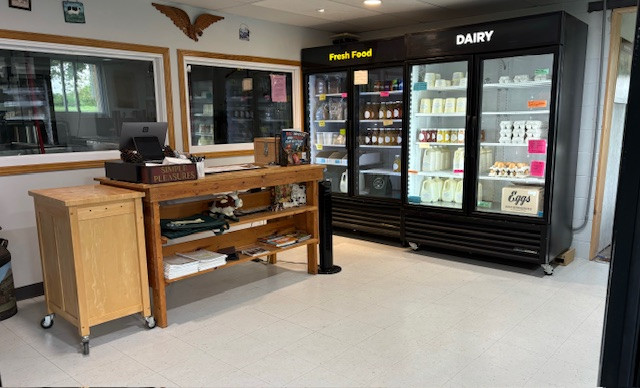
Ready to shop local? Click here to start filling your cart or come visit us at the farm store soon (hours at the bottom of the webpage).