Saving The World, One Root At A Time
posted on
March 9, 2026
As I write this, severe storms are once again in the forecast. In addition to the potential for damage from wind, hail, and tornadoes, heavy rain could be in the mix as well. Which will not be helpful in areas already or recently experiencing flooding.
There could be a number of factors that are playing a role in seemingly more frequent violent weather, but I want to focus on one that we as both farmers and consumers definitely have the ability to control--soil health.
Specifically, let's look at two of the principles of soil health. Armor and living roots. If there is no cover on the soil surface...no thatch, no plant life...exposed bare dirt is extremely susceptible to erosion (both wind if it's dry, and water from rain and flooding). A thatch, or decaying plant material, is very important in adding organic matter, insulating the soil, and protecting from erosion. But living roots (and the plants associated with them) hold the soil in place. And beyond that, when biology is present in the soil, the relationship between microbes and roots results in a fascinating process of nutrient cycling. Root hairs actually take in microbes carrying minerals and nutrients the plant needs!
The healthier soil gets, the more the structure aggregates and allows air, water and roots to move freely throughout it. The more aggregated soil is, the more it looks like chocolate cake. Think color and pore space. Also think of healthy soil structure a bit like a sponge. The more aggregated it is, the more water it can absorb and hold. Dead soil can barely infiltrate water, let alone hold it. Then what do you think happens when a heavy rain comes? Most of it runs off, increasing flash flooding potential.
Farmers have the potential to mitigate flooding by implementing management practices that increase biology in the soil (i.e. reduce and/or eliminate chemical pesticides, fertilizers and most tillage, and keep living roots in the soil as much of the year as possible).
There are compounding factors, such as how brittle or non-brittle the local environment is. This is affected by yearly rainfall patterns and how quickly dead plant material breaks down because of that. Proper management of grazing herds or flocks plays a key role in the process of soil building, but there are nuances that vary depending on where the environment lies on the brittleness scale.
Last week I took a couple of videos out in the pasture between some of the multiple rain events we had over several days. I wanted to share some of my observations of the power of living roots and the aggregation in the soil they help create. I'm not the best at narrating videos yet, so forgive my occasional lapses in searching for the right words (plus my brain has been very overworked lately ;) ).
This first video was in the barnlot pasture where the chickens have been hanging out for the winter. Roots vs. no roots is one of the takeaways here.
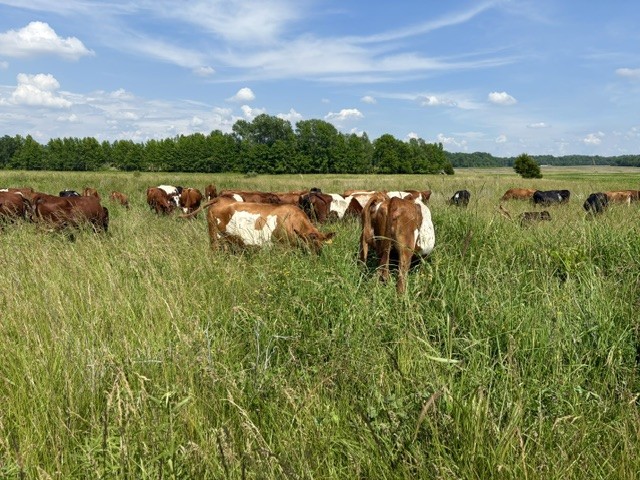
The second video is in the cow pasture where we have been bale grazing for several weeks now. You will see a stark difference in water infiltration between the sections in which the soil aggregation had and had not been disturbed. This was in a small part of one area of one pasture. Imagine the runoff vs infiltration volume on hundreds or thousands of acres with these contrasting scenarios.
If our soils could hold more water, what could that achieve?
- Reduced flash flooding and river flooding in heavy rain events.
- Greater resilience of plant life between rains because there's moisture stored in the soil. I've heard it said we are always only two weeks away from a drought...because most of our soils can't hold much moisture these days due to how they've been managed.
- Fewer devastating wildfires because droughts have been mitigated through an improved water cycle.
- Maybe even fewer severe weather events because there is a bit less swinging from one extreme to the other. Perhaps if moisture presence in the soil was evened out a bit, the atmosphere would respond in kind. Seems possible anyway!
As we continue to work toward healthier soils on our farm each year, know that when you eat food that's been grown here (or on other farms that are fostering soil biology, living roots, and aggregation), you are in fact doing your part to heal the land!