Swap Out Inflammatory Seed Oils for This Traditional Fat
posted on
May 12, 2026
Did you know that all fat does not have the same effect on your body?
For decades we were told polyunsaturated fats were better for us than animal fats.
And while there is some truth to the mantra, “all things in moderation”, the fact is that different types of fatty acids have different effects on our bodies.
Omega-6 fatty acids are found in seeds and grains (not exclusively though).
Omega-3 fatty acids are found in fish/fish oil and grass-fed animal products (especially ruminant animals like cows, sheep, goats, etc). Actually, when you search for sources of omega-3 FA’s, fish is the primary solution offered, plus flax, chia, and walnuts. No mention of pastured animal products in the top search results, even though research has shown it to be true. Make of that what you will!
Omega-6 FA’s tend to have an inflammatory effect on the body, while Omega-3’s have an anti-inflammatory effect. The closer we get to a 1:1 ratio of the two, the better off we are in terms of keeping inflammation at bay from a dietary standpoint.
A diet high in seed oils (read labels…they’re everywhere!) is one way that ratio gets out of balance. Not to mention the chemical processes--and possible residues--involved in turning a seed into an oil.
In addition, consuming fats from animals fed high amounts of grain will have higher Omega-6:3 ratios. Eggs, milk, meat…the whole gamut!
Conventional eggs may have from an 11:1 to 25:1 ratio. At the Acres Conference I heard a speaker say there had been testing done on either eggs or meat from animals fed distillers grains and the ratio was about 50:1! That’s a lot of potentially unchecked inflammation!
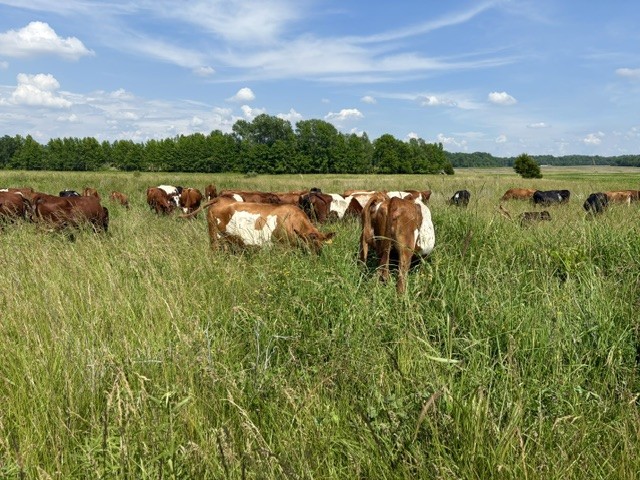
This is one of the biggest reasons to seek out pasture-raised animal foods…especially from farms that seek to improve soil health so the plants AND animals are healthier.
One of the traditional fats that generations before us made at home and used regularly was beef tallow.
There’s an old saying regarding pig butchering on homesteads of old: they used everything but the squeal. Well, I guess for cows that would mean they used everything but the moo?
The fat from a cow is something that could easily go to waste if we forget the skills our ancestors used to survive.
Beef fat once rendered into tallow can be used in cooking, for skin care products, and even in making candles!
I saved a lot of beef fat from the animals we processed last year, intending to render it during the off season over the winter. But if you’ve been getting my emails for a while, you may know this was not a winter conducive to that task for us.
So now YOU have an opportunity to make your own tallow using our 100% grass-fed and grass-finished beef fat.
Experience the satisfaction of knowing you’re reducing inflammation in your body while reviving an old tradition in your home.
We have both fat trimmings and leaf (kidney) fat available. I’ve heard the kidney fat is preferred for skin care products, but for cooking purposes both will work.
In case you're feeling uncertain about the process, I thought this article was helpful for explaining several different methods.
If you're ready to try your hand at keeping a lost art alive, click here to place an order for beef fat today!
P.S. Once you have it ready to use, you'll definitely want to try some homemade french fries, fried in beef tallow ;)