Where's The Milk?!?
posted on
April 7, 2026

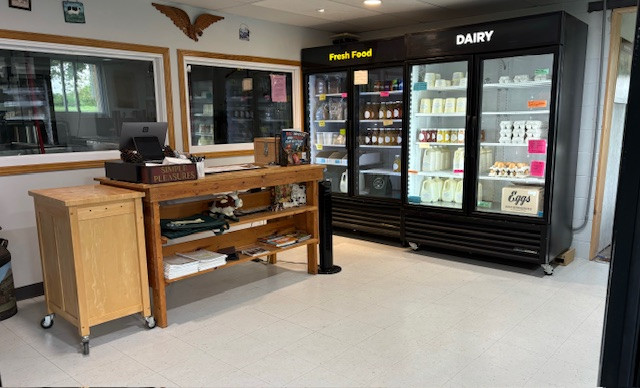
Lots of people are wondering when we'll have milk for sale again. It's definitely a few days later this year compared to the last several, but it's slowly starting to flow! And it should start steadily increasing the next couple weeks.
In recent years we've aimed for our calving window to start around April 1. But inevitably there will be some babies who decide to make their appearance a week to 10 days early. And last year you may recall the story of Clara (check that blog post out from last March!), who ended up calving March 11, I believe.
When you're trying to squeeze every last bit of projects and maybe even rest into no-milking season, babies who make their appearance early definitely have a way of altering your schedule! Not to mention the earlier in the spring it is, the greater the chances of weather that isn't so nice for wet helpless newborns leaving a nice warm womb.
So last summer I waited several extra days before turning the bulls in with the cows for breeding season in hopes of delaying the onset of calving just a bit.
And apparently, it worked! The first calf was born on April 1. Interestingly, the first cow due to calve was Montana, and she was due April 6th. But she was actually the 9th cow to calve this afternoon! Often first-calf heifers will deliver a little earlier...5 of the 9 are first-calf heifers.
The bull's genetics influence gestation length (and calf size) as well. I once heard a farmer in search of a new bull say he wanted the bull that had the smallest birth weight coupled with the biggest weaning weight. Those smaller babies are easier to deliver without assistance, but if the mama has lots of butterfat in the milk, little babies grow big and strong while nursing!
But I digress...you're here to hear about milk, not necessarily all my cow talk :D.
When a cow calves, or freshens, the milk she first produces is called colostrum. It's a little richer and maybe a tad less sweet than regular milk, and it's high in antibodies (immunoglobulins) which transfer passive immunity to the newborn calf when it nurses. A calf who doesn't receive colostrum in a timely manner after birth will be likely to suffer from health problems the rest of its life...if it survives. So the calf always gets first dibs.
When we milk the cow for the first time, we test the milk using a reagent in what's called a California mastitis test (CMT) that indicates the presence of mastitis (udder infection). If there is no sign of infection, we will save the colostrum not consumed by the calf.
The amount of colostrum we can bottle each spring depends on how many cows have calves, the production capacity of each cow when she is milked that first day and how hungry her new baby was, and whether the milk tests clear with the CMT. And on top of that, occasionally we intentionally don't milk out the cow completely because pulling too much milk out at once can shock her system by pulling too much calcium at once and result in hypocalcemia, or milk fever--a potentially deadly metabolic imbalance if not treated. I milked Sally yesterday for her first time after calving, and because she is 14 years old this spring I didn't want to risk putting too much demand on her by taking all the milk.
The following days' milk lessens in concentration of antibodies, so usually the second or third milking is when we will save the fresh milk for bottling, again provided the CMT results are clear.
Most of the time our first calf heifers don't have quite as much capacity for milk production their first year lactating because they're still growing themselves a bit. Since each cow is also all currently nursing a calf, that cuts down on the amount of milk we can harvest. But some of the calves will go to new homes as bottle babies for other folks who want to raise their own cows. That should start this week too.
Babies being born right and left plus training new heifers to stand still in the milking parlor makes April a crazy month around here. Especially the first 2-3 weeks.
Things are about to start shifting, but for the past few days, the entire process from bringing cows in to the holding pen from the pasture to getting the ones who have calved lined up in the milking parlor to dodging poo (it's a battle zone some days!) to testing milk to attaching buckets to the lines (because there's not enough milk yet to milk them into the pipeline) to cleaning milkers to hosing down the parlor has taken around 2 1/2-3 hours. Sometimes for a couple pints of colostrum, or maybe a quart or two of milk.
It's soon to get better, but that's a whole lotta work for not very much to show for it :D
So hopefully that gives you a little picture of why it takes a little time to really get back in the swing of things.
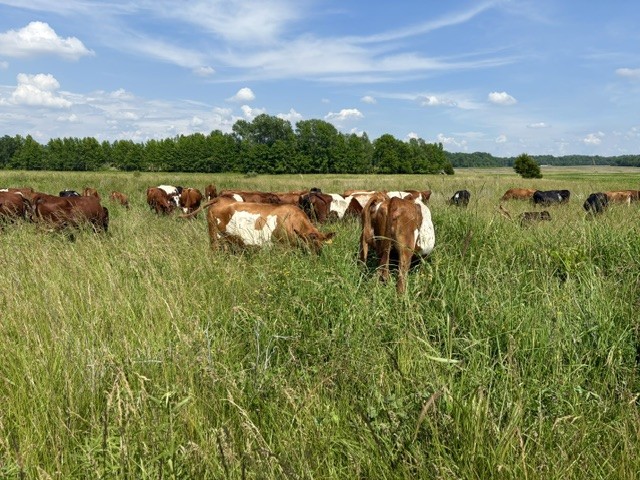
Between the extra week+ before calving and the warm days in March, the cows are certainly blessed with much better grass growth this April compared to last year when they started calving. We've been purposely trying to let the pastures grow more in the spring before grazing them, as I've realized I've been inadvertently overgrazing at certain times of the year. Weakened root systems from overgrazing causes less resilience in drought and reduced plant health. Healthy roots and healthy soil biology are vital to life as we know it!
Also this year, instead of grafting calves onto nurse cows and keeping a separate nursing herd for most of the season, this year I'm planning to probably keep a few less calves but leave them all on their own mamas. So we'll still have some cows to milk who aren't feeding a calf, but don't have to keep the two groups separate. I'm hoping this allows me to give a little more time to the grazing rotation and do even more to improve the soil and plant health here, which is directly connected to healthier cows, meat, and milk! It ALL starts in the soil!